

The photovoltaic cell can generate electricity through illumination by sunlight.

The generation is undertaken by illumination of a p-n junction to generate holes-electrons that flow through the external circuit and recombine to generate electricity.
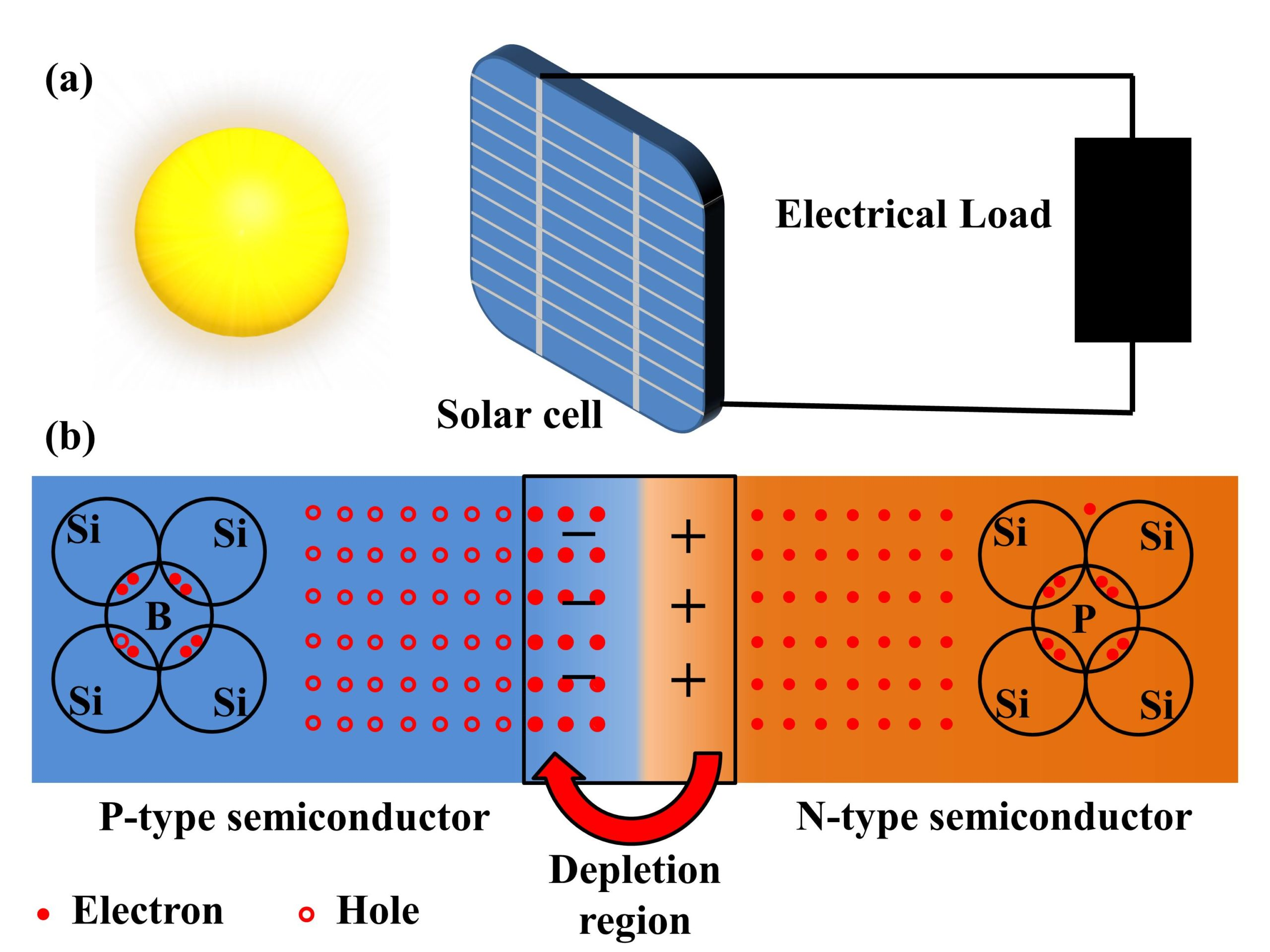
In this conversion process, losses reduce the overall efficiency of the photovoltaic cell. One such loss is Recombination Loss. In this loss, the generated carriers get consumed before they can contribute to the photovoltaic output i.e. they impact both the Short Circuit Current (Isc) and Open Circuit Voltage (Voc).
Recombination losses are of four types
- Radiative recombination
- Shockley-Read-Hall (SRH) recombination
- Auger recombination
- Surface recombination
These losses can occur at the surface or in the bulk of the solar cell.
To overcome these losses, passivation and heavy doping for the contacts are used.
- Top Surface
- Passivation – Silicon Dioxide or Silicon Nitride is used (which also behaves as ARC: Anti-Reflective Coating)
- Heavy doping is done below the metallic contacts
- Bottom Surface Passivation
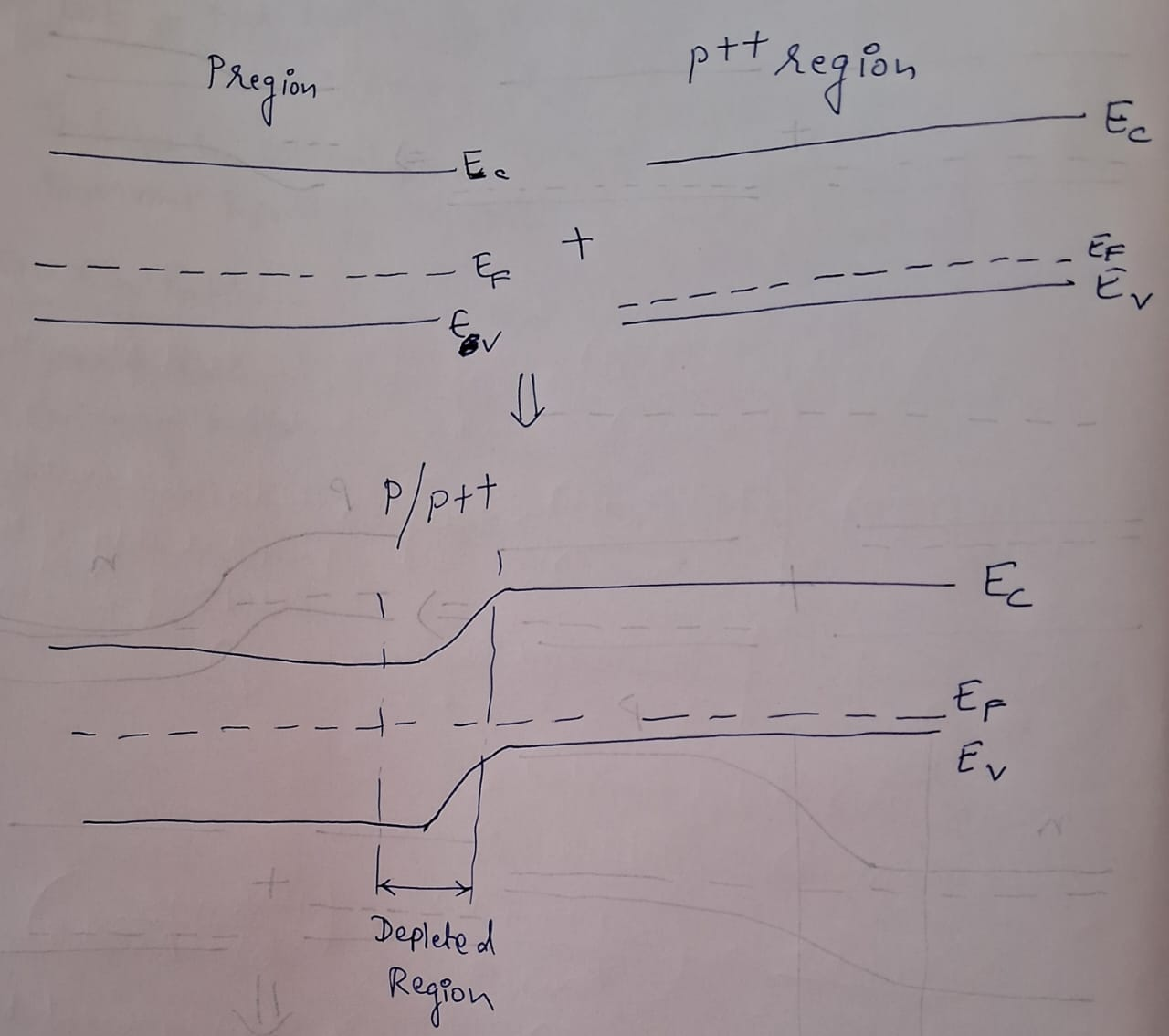
- Back Surface Field(BSF) generation by having a differential grading (p/p++) layer to form a field that forms a barrier to the minority carriers
- Passivation – Al2O3 and SixNy (Silicon Nitride)
The interface between the high and low-doped region behaves like a depleted region as in the case of a p-n junction that does not allow minority carrier flow and increase in the overall Isc and Voc.
Hope you find this helpful
Further Reading:
 Lateral Thinking
Leave a comment