

Definition of Biogas
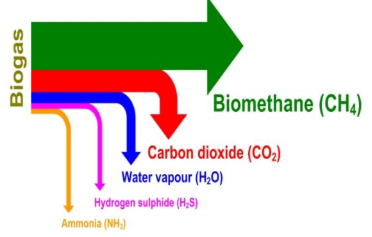
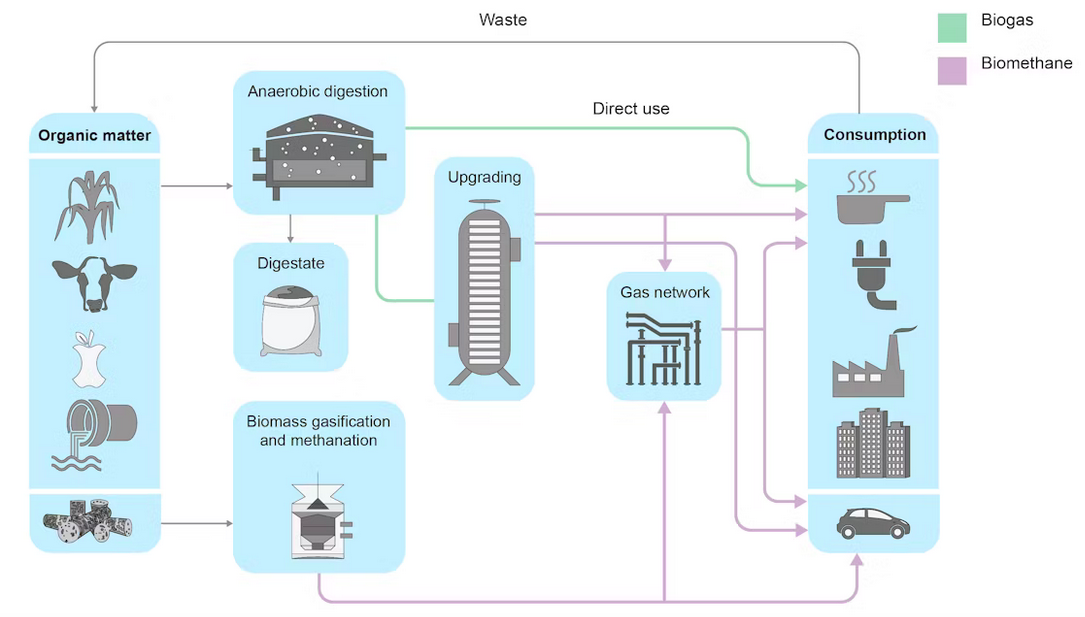
Biogas is a renewable energy source produced from the anaerobic digestion(AD) of organic matter, such as agricultural waste, manure, municipal waste, plant material, sewage, green waste, or food waste. It primarily consists of methane (CH4) and carbon dioxide (CO2).
Further Reading on Anaerobic Digestion: https://www.epa.gov/anaerobic-digestion/basic-information-about-anaerobic-digestion
How is it produced?
- It is produced through a process called anaerobic digestion, where microorganisms break down organic material in the absence of oxygen
- The process occurs in a controlled environment such as a biogas plant, which captures and utilizes the methane produced for energy
Further Reading: https://www.gasdata.co.uk/2022/08/08/what-is-biogas-biomethane/
How does it compare with other sources of energy?
- Biogas has a lower calorific value than natural gas, LPG, and CNG.
Avenues for Deployment of Biogas
- Biogas is best suited for rural and agricultural areas with abundant organic waste
- It can also be effectively deployed in urban settings with substantial organic municipal waste and
- It can also be deployed in industries generating biodegradable waste
Benefits of using Biogas
- Greenhouse Gas Emissions: Reduction in emissions by capturing methane that would otherwise escape into the atmosphere
- Waste Management: Reducing landfill use and the associated methane emissions.
- By Products: Digestate – a semi-solid material left over after anaerobic digestion – has multiple uses like Bedding for livestock, Flowerpots, Soil amendments, and Fertilizers
Challenges Linked To Biogas Adoption
- High initial investment costs
- Technical complexities
- The need for continuous feedstock supply can hinder widespread implementation
- Need for improved infrastructure
- Policy support(from the local/federal government) to encourage biogas adoption
Despite these challenges, concerted efforts are being made globally for the broader adoption of Biogas so that the energy mix can be diversified and moved away from fossil fuels in line with Sustainable Developmental Goals and Net Zero Commitments.
Compressed Biogas
To make Biogas more acceptable and aligned with the sources derived from fossil fuels, we come across the concept of Compressed Biogas (CBG).
Compressed Biogas (CBG) is made from Biogas that has been transformed into a near-pure source of methane by removing any CO2 and other contaminants present in the biogas. It is then compressed for storage-transportation-use making it comparable to CNG in terms of energy content and utility –> Compressed Bio Gas (CBG), has a methane (CH4) content of more than 90%.
Embracing biogas as a part of our energy mix can significantly contribute to a cleaner, more sustainable future.
Hope you find this read helpful
Follow me for more content on Investing, Geopolitics, Technology, Astrology and Finance.
God Bless!
 Lateral Thinking