

What is a Battery?
A battery is an energy storage device that converts chemical energy into electrical energy. It consists of one or more cells, each containing a positive electrode (cathode), a negative electrode (anode), and an electrolyte that allows ions to move between the electrodes, enabling the flow of electric current.
What is a Lithium-Ion Battery?
Lithium-ion (Li-ion) batteries are rechargeable batteries widely used in electronics and electric vehicles. They have high energy density, long cycle life, and efficient charge/discharge performance. The anode is typically made of graphite, and the cathode can be composed of various lithium compounds.

What is a Sodium-Ion Battery?
Sodium-ion (Na-ion) batteries operate similarly to Li-ion batteries but use sodium ions instead of lithium ions. Sodium is more abundant and cheaper than lithium, making Na-ion batteries a promising alternative for large-scale energy storage solutions.
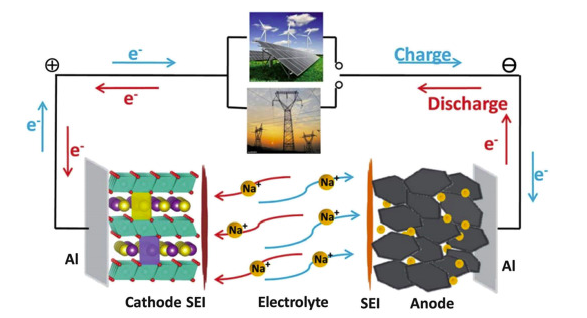
Differences Between Lithium-Ion and Sodium-Ion Batteries
- Energy Density: Li-ion batteries(200-300 Wh/kg – Data Ref) have higher energy density compared to Na-ion batteries(50-150 Wh/kg – Data Ref), meaning they can store more energy in a given volume
- Cost: Sodium is more abundant and less expensive than lithium, potentially reducing the overall cost of Na-ion batteries
- Cycle Life: Li-ion batteries generally have a longer cycle life, although advancements in Na-ion technology are closing and will possibly exceed this gap
- Material Availability: Lithium resources are limited and geographically concentrated, whereas sodium is widely available, reducing supply chain risks
Why Research is Needed for Sodium-Ion Batteries
Research is crucial to enhance the performance, efficiency, and commercial viability of Na-ion batteries. Addressing challenges like improving energy density, cycle life, and scalability can make Na-ion batteries a competitive alternative to Li-ion batteries, especially for grid storage and other large-scale applications.
Why are Batteries Crucial for Clean Tech Adoption?
Batteries are essential for storing renewable energy, enabling stable and reliable power supply from intermittent sources like solar and wind. They support the transition to electric vehicles, reducing reliance on fossil fuels. Advancements in battery technology are pivotal for achieving a sustainable, clean energy future.

Understanding batteries and their differences helps in appreciating their role in advancing clean technologies and ensuring a sustainable energy future.
Hope you find this read helpful
Follow me for more content on Investing, Geopolitics, Technology, Astrology and Finance.
God Bless!
 Lateral Thinking