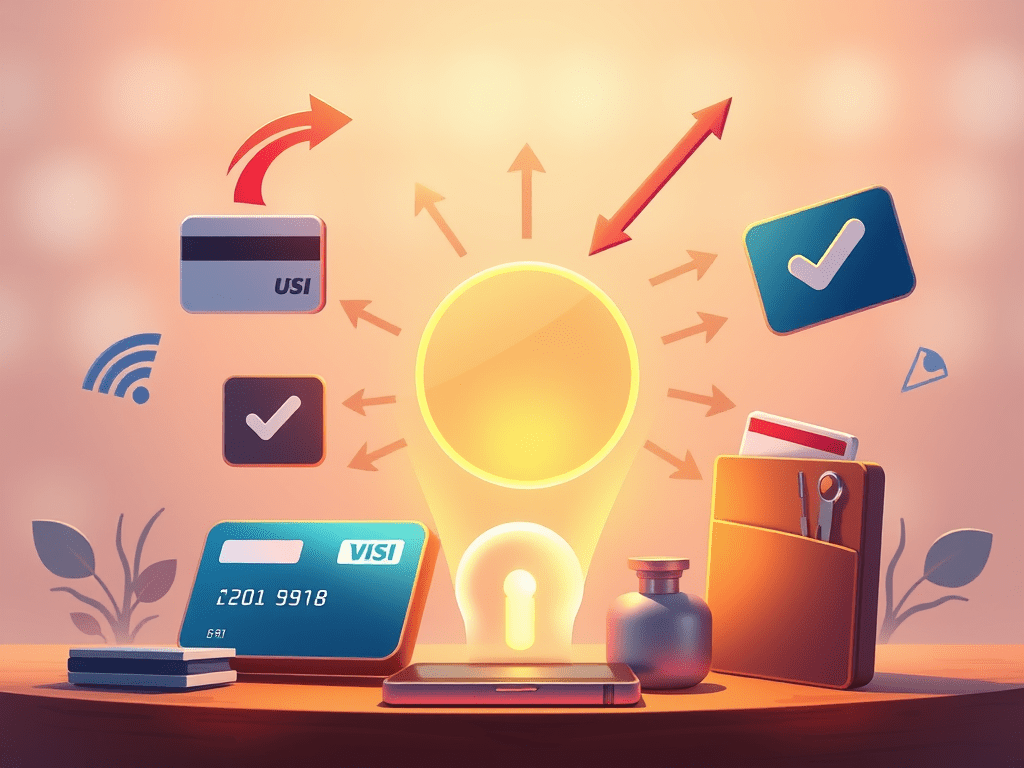
Digital payments are cashless transactions where money is transferred electronically from one individual/entity to another individual/entity.
In an evolving digital world, different initiatives are being made by governments across the world to facilitate cashless transactions to bring about traceability, security and lower per transaction cost(if any).
In India, since the launch of Digital India in 2015, the Government of India is coming up with new methods to make payment cashless.

Let us look into the different Digital Payment Methods available in India which are popular and used widely:
- Unified Payments Interface (UPI)
- It uses QR Codes or Mobile Number or VPA (Virtual Payment Address) or Bank Account Details to initiate transactions
- Fast, secure, and free for most users
- Ideal for small and medium transactions, but mistakes like sending to the wrong UPI ID can be hard to resolve
- Debit Cards
- It is issued by the bank where you hold savings or current account. The service providers for the Debit card can be – VISA, Mastercard, RuPay, UnionPay, etc.
- Convenient for in-store and online purchases; annual fees may apply
- Risk of fraud if card details are compromised, especially on unverified platforms
- Credit Cards
- It is issued by the bank (where you may or may not hold savings or current account) or NBFC(in partnership with a Bank). The service providers for the Debit card can be – VISA, Mastercard, RuPay, UnionPay, etc.
- Rupay-based Credit Cards can be used to make payments using UPI
- Useful for high-value and recurring transactions; may have annual fees and interest charges if payments are delayed
- Secure but misuse can lead to debt
- Internet Banking (Net Banking)
- This service is provided by all banks operating in India. The service is activated once a savings or current account is opened with the bank
- It is suitable for large transactions and bill payments
- May include transaction fees for Real-Time Gross Settlement (RTGS) or Immediate Payment Service (IMPS)
- Aadhaar Enabled Payment System (AePS)
- It is a new addition to payment ecosystem
- It enables transactions using Aadhaar authentication
- Convenient for rural areas but dependent on biometric accuracy and network connectivity
Kindly note, we have not included Prepaid Payment Instruments (PPIs) here as they are used for some specific use cases and have not been widely adopted as compared to the alternatives shared above.
How has ‘Jan Dhan-Aadhar-Mobile’ (JAM) helped in increasing Digital Payments in India?
The JAM trinity has revolutionized financial inclusion by providing bank accounts, Aadhaar-linked authentication, and mobile connectivity. This has empowered even rural populations to adopt digital payments seamlessly.
How to choose the right option for making Digital Payments?
- Small Transactions (< ₹2,000): Use UPI or AePS
- Recurring Payments (~ ₹5,000): Debit or Credit Cards
- Large Transactions (> ₹25,000): Opt for Net Banking (RTGS/NEFT)
Digital payments offer convenience and flexibility but require careful consideration of risks and charges to make an informed decision.
Hope you find this read helpful
Follow me for more content on Investing, Geopolitics, Technology, Astrology and Finance.
God Bless!
 Lateral Thinking