

Introduction
Activated carbon (also known as activated charcoal) is a highly porous form of carbon with an immense surface area.
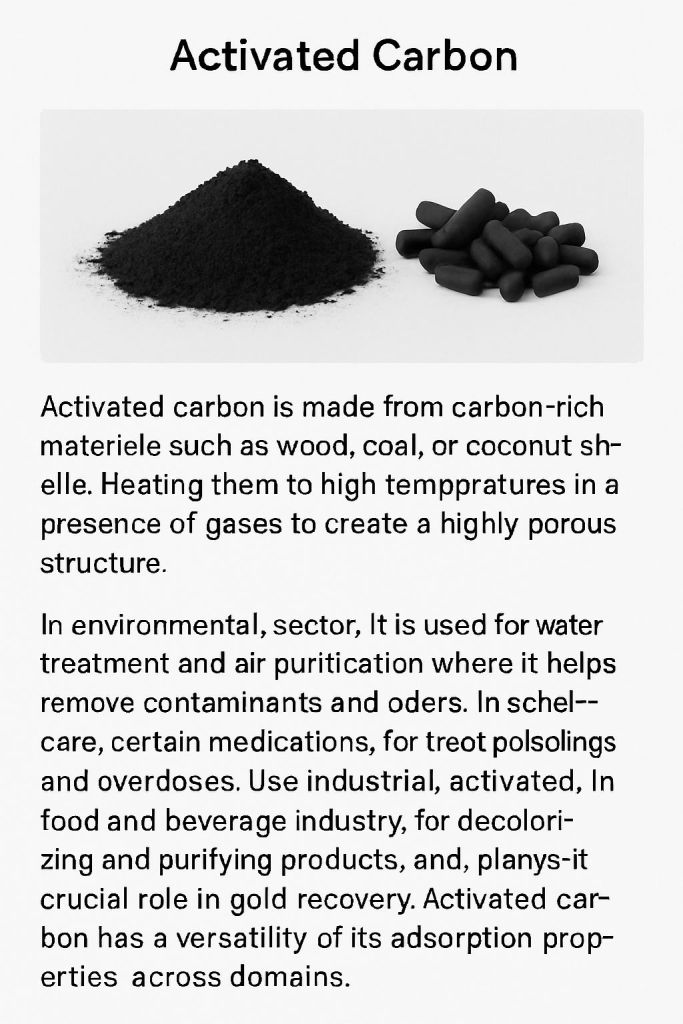
It is widely known for its ability to trap and filter impurities, making it valuable across various industries.
How is it made?
Activated carbon is typically produced from carbon-rich materials such as coconut shells, wood, peat, or coal.
Steps for making Activated Carbon:
- Raw material is first carbonized, meaning it is heated in the absence of air to form char
- Then it goes through an “activation” process, either using steam or chemicals, at high temperatures. This step creates a vast network of tiny pores, increasing the surface area and enhancing its adsorption capacity
Where is it used?
Activated carbon has versatile applications:
- Water Purification: It is commonly used in home water filters and wastewater treatment plants to remove chlorine, organic compounds, and odours
- Air Filtration: In industries and homes, it is used to remove pollutants, smoke, and volatile organic compounds (VOCs) from the air
- Medicine: It is used in emergency treatments for certain types of poisoning and drug overdoses, as it can bind toxins in the stomach
- Food and Beverage Industry: Helps in decolorizing sugar, removing impurities, and improving taste
- Gold Recovery and Mining: Used to extract gold from ore in mining processes.
Conclusion
Activated carbon is an everyday hero in the background that quietly does multiple tasks that improve our quality of life.
Hope this brief blog post is able to shed light on the same.
 Lateral Thinking
Leave a comment