
Introduction
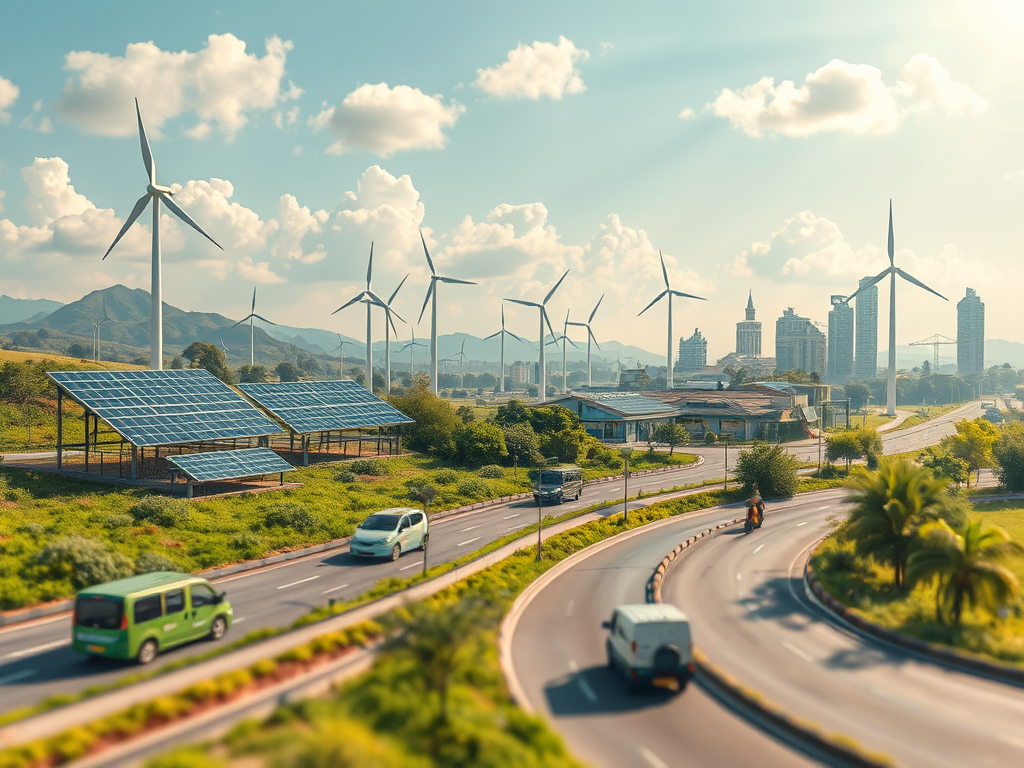
As the world grapples with climate change, the need to drastically reduce carbon emissions has become urgent. This is where decarbonisation comes into play — the process of eliminating or reducing carbon dioxide (CO₂) and other greenhouse gases from energy production, transportation, industries, and daily life.
India, being the third-largest emitter globally, is also one of the most active nations in shaping a greener future.
Let’s explore how decarbonization impacts every sector of our economy and the Indian efforts that make it possible.
Energy Sector
This is the foundation of decarbonisation, where clean energy solutions are being rapidly adopted, which can be listed down as follows:
- Renewable Energy: Companies like ReNew Power, Adani Green, and Tata Power Solar are scaling wind and solar power. Rajasthan and Karnataka are leading in solar installations
- Battery Storage: Under the PLI scheme, Reliance Industries and Ola Electric are building battery manufacturing units
- Smart Grids: The Smart Meter National Programme by EESL is modernising how power is distributed and tracked
- Nuclear Power: Projects like the Kudankulam Nuclear Plant offer clean, continuous power as an alternative to coal
Transportation Sector
With growing urbanisation, India’s transport needs are rising — so is the push to electrify and innovate.
- Electric Vehicles (EVs): Players like Tata Motors, Ather Energy, and Ola Electric are leading India’s EV transition. Delhi and Maharashtra have implemented strong EV policies
- Green Fuels: Indian Oil, HPCL, and NTPC are investing in green hydrogen and biofuels
- Public Transport: Metro rail systems in Delhi, Mumbai, Chennai, Hyderabad, Pune, and Bengaluru reduce individual carbon footprints significantly
- Green Logistics: Amazon India and Flipkart are switching to electric delivery fleets by 2030.
Industrial Sector
Heavy Industries, especially cement and steel, are among the hardest to decarbonise. Steps taken in this sector are as follows
- Electrification: JSW Steel and Tata Steel are adopting energy-efficient electric arc furnaces
- Green Hydrogen: The National Green Hydrogen Mission is pushing companies like GAIL, NTPC, and Reliance to pioneer hydrogen use in heavy industry
- Carbon Capture: IOCL and ONGC are piloting Carbon Capture, Utilisation and Storage (CCUS) technologies
- Sustainable Materials: Cement giants like Ultratech use fly ash and slag to reduce CO₂ emissions in construction
Buildings and Construction
Energy-efficient and net-zero buildings are essential in the fight against climate change. The steps taken in this area are as follows:
- Green Buildings: Infosys campuses and Godrej One are certified green buildings under the IGBC
- Efficient Appliances: EESL’s UJALA programme helped distribute over 36 crore LED bulbs
- Rooftop Solar: Government buildings are adopting rooftop solar systems under the KUSUM scheme
- Net-Zero Designs: Institutions like CEPT University are building energy-neutral campuses
Agriculture & Land Use
India’s agricultural sector contributes to methane and nitrous oxide emissions, which are being dealt with steadfastly as follows:
- Natural Farming: Zero Budget Natural Farming (ZBNF) is gaining traction in Andhra Pradesh and Karnataka
- Methane Management: Biogas plants in rural homes are supported under NABARD’s schemes
- Afforestation: The Green India Mission and massive tree-planting drives in Maharashtra promote forest carbon sinks
- Soil Health: Sikkim became the first fully organic state, reducing the use of chemical fertilisers
Waste Management
Urban and Rural consumption is leading to the fast filling of Landfills. Based on the improper disposal and non-value extraction, Landfills tend to be a major source of methane.
Decarbonising this space is both challenging and crucial, with steps taken in this direction as follows:
- Waste-to-Energy Plants: Operational in Delhi (Okhla) and Kochi (Brahmapuram)
- Circular Economy Startups: Recykal and Cero are digitising and automating waste collection and recycling
- Landfill Gas Capture: Cities like Hyderabad are exploring methane recovery from old dumping grounds
Finance & Policy Support
Decarbonisation is enabled by finance, policies, and market incentives.
- Market Mechanisms: The PAT Scheme by BEE promotes trading of energy savings among large industries.
- Green Bonds: Banks like SBI and YES Bank issue green bonds to fund clean energy projects.
- Government Incentives: Schemes like FAME II and PLI for Solar and Batteries are game-changers.
Regulations: India’s adoption of BS-VI norms, Energy Conservation Building Codes, and Hydrogen Roadmap sets a strong regulatory framework.
Technology & Innovation
India’s startup and tech ecosystem is playing a pivotal role in climate action.
- Smart Cities: Energy tracking, smart lighting, and efficient water use are part of the Smart Cities Mission
- Climate Tech Startups: From Oorja (solar irrigation) to Agnikul Cosmos (efficient satellite launch systems), innovation is driving decarbonisation.
- Blockchain in Carbon Tracking: TCS and Tech Mahindra are piloting platforms to measure and trade emissions transparently.
Behavioural & Social Change
Finally, sustainable living needs societal participation.
- LiFE Movement: Launched by Prime Minister Modi, it promotes eco-conscious habits at the individual level.
- Consumer Action: Banning single-use plastics and promoting sustainable products are gaining momentum.
- Corporate Commitments: Companies like Infosys, Wipro, and ITC have publicly committed to net-zero goals.
Summary
Decarbonisation in India is not limited to renewable energy or electric vehicles. It is a multi-sectoral, nationwide transition. From startups to steel plants, from farm fields to financial institutions — everyone has a role to play.
India is making strides, but the road ahead needs deep collaboration, policy coherence, public participation, and technological acceleration.
 Lateral Thinking
Leave a comment