Introduction
From April 1, 2026, India’s new Solid Waste Management Rules, 2026, will come into effect, reshaping how waste (especially plastic waste) is handled across the country. While India already had solid waste and plastic regulations in place, the 2026 Rules tighten implementation, formalize digital tracking, and push stronger accountability through the “polluter pays” principle.
For businesses that manufacture, sell, distribute, or use plastic (in any form), the shift is not cosmetic. It is operational.
Through this brief post, let us try to understand the impact of the new rules….
What Is The Change?
Mandatory Four-Way Segregation at Source
This may sound basic, but the enforcement framework is becoming stronger. Municipal bodies are expected to impose penalties for non-compliance.
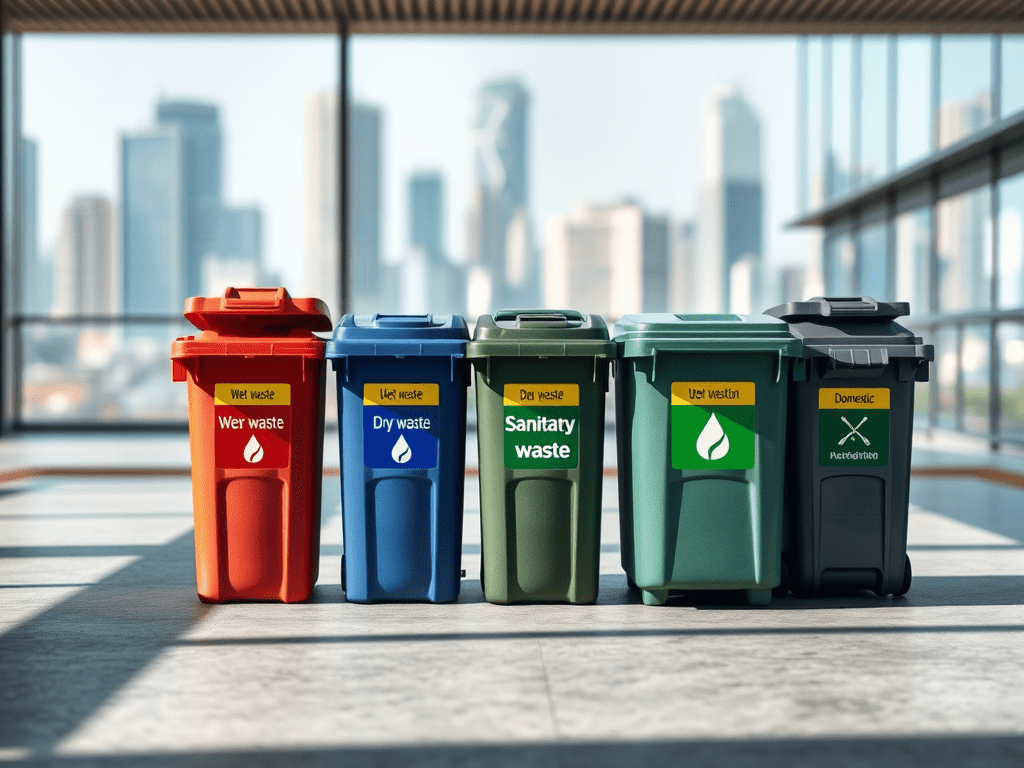
Households and bulk generators must segregate waste into:
- Wet waste
- Dry waste (including plastics)
- Sanitary waste (diapers, pads)
- Domestic hazardous/special-care waste (batteries, medicines, bulbs)
For businesses, this means internal waste systems must be redesigned to align with the 4-stream system.
Stronger Extended Producer Responsibility (EPR)
The Rules reinforce and integrate Extended Producer Responsibility (EPR), building on earlier plastic waste regulations (such as the Plastic Waste Management Rules, 2016).
Under EPR:
- Producers and brand owners must ensure that the collection and processing of plastic packaging is equivalent to what they introduce into the market
- Reporting will be centralized & digital, and false reporting will attract penalties(environmental compensation)
Registrations and compliance tracking are handled via the Central Pollution Control Board (CPCB) portal.
In simple terms: if your company puts plastic into the market, you are responsible for its end-of-life, not just its sale.
Digital Monitoring and Accountability
A central shift under the 2026 framework is traceability. The government is pushing:
- Online registration
- Digital returns
- Documented proof of collection and processing
- Standardized compliance reporting
This reduces the scope for paper-based claims without verified waste handling.
Polluter Pays & Environmental Compensation
The Rules clearly empower State Pollution Control Boards to levy penalties for:
- Non-registration
- Inaccurate EPR reporting
- Failure to meet collection targets
- Improper waste handling
This introduces financial risk for non-compliance along with reputational risk.
How Different Stakeholders Will Be Impacted?
Manufacturers & Brand Owners
If you manufacture packaged goods (FMCG, electronics, cosmetics, pharma, etc.), your compliance burden increases.
Implications:
- You must track the volume and type of plastic packaging introduced
- You must ensure equivalent collection and processing
- You may need to redesign packaging to meet recyclability or recycled content expectations
Example 1:
A mid-sized FMCG company using multilayer flexible plastic packaging may find it expensive to recover low-value plastic waste. It may choose to shift to mono-material packaging that is easier to recycle, reducing long-term compliance costs.
Bulk Waste Generators (BWGs)
Large offices, malls, airports, hospitals, housing societies, and educational institutions fall under this category.
Implications:
- Mandatory segregation compliance
- Proper storage and handover to authorized waste handlers
- Possible direct liability for violations
Example 2:
A corporate park in Mumbai that previously handed over mixed waste to a vendor will now need clearly labeled segregation bins, internal SOPs, staff training, and documented handover records.
Retailers & E-commerce Platforms
Online marketplaces and large retail chains may need stronger verification systems.
Implications:
- Sellers on platforms must be EPR-compliant
- Packaging waste accountability could extend to marketplace operators
- Opportunity to introduce take-back or refill models
Example 3:
An e-commerce platform selling private-label products may introduce a return-for-discount packaging scheme to offset EPR obligations.
Waste Aggregators & Recyclers
The Rules create both pressure and opportunity.
Implications:
- Greater demand for accredited Material Recovery Facilities (MRFs)
- Better pricing for traceable, compliant recycling services
- Increased formalization of the informal waste sector
NGOs and social enterprises working at the intersection of waste and livelihoods may find stronger partnership opportunities with corporates seeking compliant recovery channels.
Municipal Bodies
Urban local bodies must:
- Enforce segregation
- Maintain digital waste records
- Strengthen decentralized waste processing
- Implement environmental compensation mechanisms
The enforcement burden is significant, so proactive businesses may avoid friction later.
What Businesses Should Be On An Immediate Basis?
- Map Your Plastic Footprint
Identify all plastic packaging types introduced into the market - Review EPR Registration Status
Ensure compliance with CPCB portal requirements and confirm reporting accuracy - Assess Packaging Design
Evaluate recyclability, reuse potential, and recycled content feasibility - Strengthen Vendor Agreements
Add clauses requiring documented waste collection and processing proof - Train Internal Teams
Procurement, compliance, and operations teams must understand segregation and EPR obligations
The Larger Shift: From Disposal to Responsibility
Earlier, waste management was seen as a municipal responsibility. Now, responsibility is moving upstream, i.e., towards producers, brand owners, bulk users, and organized market players.
For businesses, this means:
- Compliance becomes a board-level discussion
- Packaging design becomes a strategic lever
- Waste data becomes as important as sales data
Companies that move early may reduce compliance risk, improve ESG positioning, and unlock circular economy advantages. Those who delay may face penalties, operational disruption, and higher corrective costs.
Final Thought
The Solid Waste Management Rules, 2026, are not just about waste but about accountability, transparency, and traceability in the plastic value chain.
For businesses using plastics, the message is clear: Track it. Design it better. Recover it. Prove it.
In upcoming articles in this series, will try to break down information in a bit of detail on the following topics:
- EPR compliance in detail
- Recycled content mandates
- Practical packaging redesign strategies
- How startups and NGOs can plug into this transition
If you are a business currently evaluating your exposure under the 2026 Rules, now is the right time to act, especially in March 2026.
 Lateral Thinking
Leave a comment