
Introduction
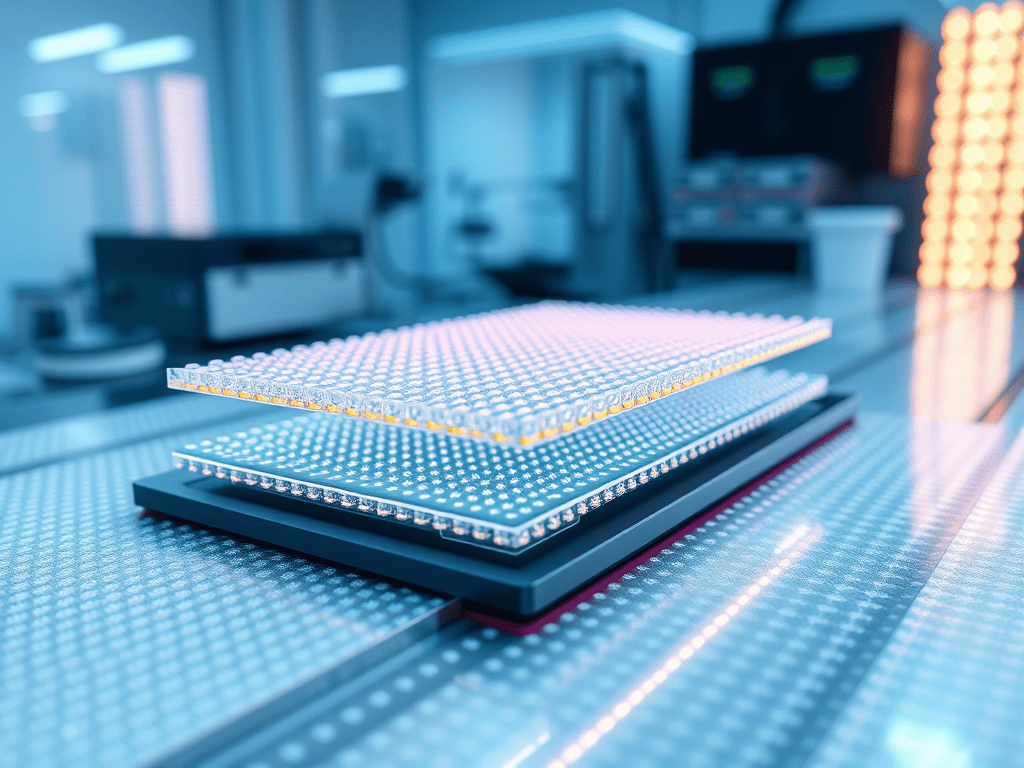
Quantum computers rely on extremely delicate physical systems to store and process information. One of the important building blocks that enables these systems is thin material films of specialized materials deposited on a surface. These films are often only a few nanometers to micrometers thick, but they play a critical role in enabling quantum behavior.
What Materials Are Used?
- Superconducting materials such as aluminum and niobium are widely used. These materials can conduct electricity with almost zero resistance when cooled to extremely low temperatures, allowing quantum bits (qubits) to maintain their fragile quantum states
- Semiconductor materials like silicon, silicon-germanium, and gallium arsenide are also used. These materials help create structures that can trap and control individual electrons, which can then function as qubits
- Insulating materials such as aluminum oxide are often added as thin barrier layers between conductive materials. These layers help form components like Josephson junctions, which are central to many superconducting qubit designs
- Topological materials and certain metal oxides are also being explored because they may provide more stable quantum states that are less sensitive to noise and disturbances
How Are These Films Grown or Deposited?
- One common approach is physical vapor deposition, where a solid material is heated or energized until it releases atoms that settle onto a surface and form a thin layer
- Another widely used method is chemical vapor deposition, where gases react on a surface to create a thin film of the desired material
- In some cases, molecular beam epitaxy is used. This technique allows scientists to deposit atoms one layer at a time in an ultra-controlled environment, producing extremely pure and uniform films
These processes usually take place in highly controlled cleanroom environments to prevent contamination.
Why Do These Films Have Unique Properties?
The unique behavior of these films comes from a combination of material choice, thickness, and extreme operating conditions.
When certain materials are cooled close to absolute zero, they can enter a superconducting state, where electrical resistance disappears, and quantum effects become easier to control.
At very small scales, the quantum nature of electrons becomes more prominent. Electrons can occupy discrete energy states, tunnel through barriers, or exist in superposition – properties that are essential for quantum computing.
The thin-film structure also allows engineers to precisely design circuits at the nanoscale, enabling the creation of quantum devices like superconducting qubits and quantum dots.
Why Thin Films Matter
In many ways, thin films are the foundation of modern quantum hardware. By carefully selecting materials and controlling how they are deposited, scientists can create structures where quantum effects are stable enough to perform calculations.
As quantum computing continues to evolve, advances in materials science and thin-film fabrication will likely play a major role in improving qubit stability, scaling systems to larger sizes, and making quantum computers more practical.
 Lateral Thinking
Leave a comment