
Introduction
In India, three common gas fuels power our daily lives: LPG, CNG, and PNG.
While they may sound similar, they serve different purposes.
Differentiation
Let us try to understand at a basic level what each one is
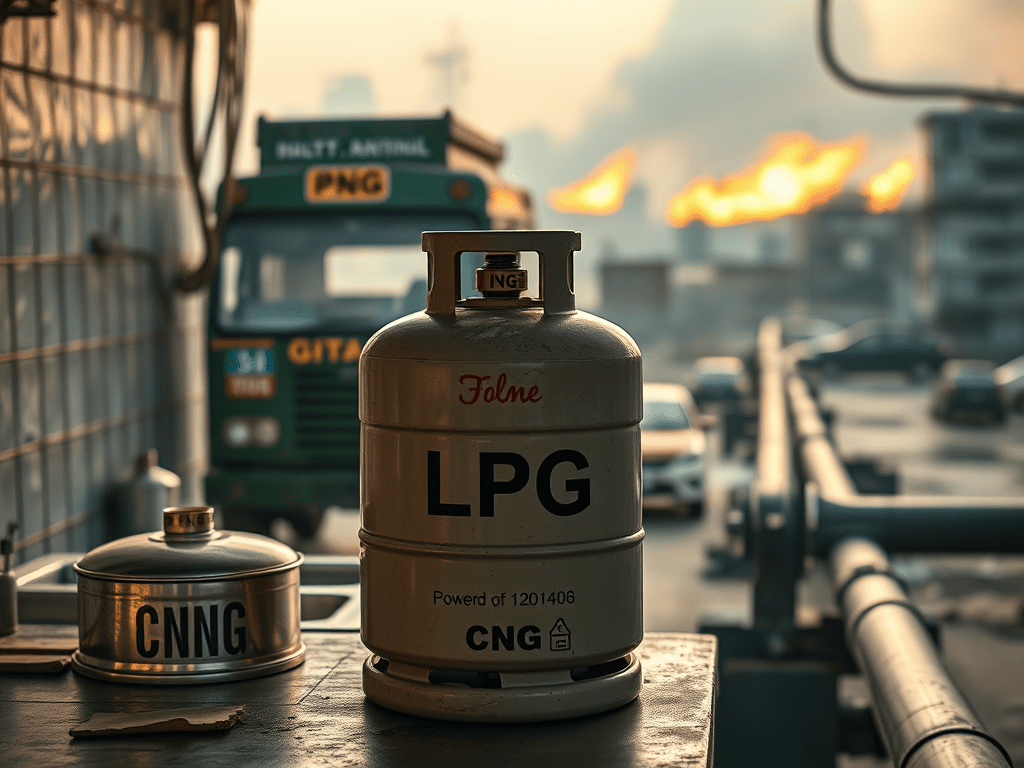
- LPG (Liquefied Petroleum Gas) is the most widely used cooking fuel in Indian households. It comes in cylinders and is easy to transport, especially in areas without pipeline infrastructure
- CNG (Compressed Natural Gas) is mainly used as a fuel for vehicles. It is cleaner and cheaper than petrol or diesel, making it popular for autos, taxis, and buses.
- PNG (Piped Natural Gas) is natural gas supplied directly to homes and industries through pipelines. It eliminates the need for cylinders and is commonly used in urban areas.
The key difference lies in delivery and dependency.
LPG depends heavily on imports and transportation, while PNG and CNG rely more on pipeline networks and domestic distribution.
How has the Ongoing War impacted each one of them?
This distinction becomes important in times of global conflict, like the ongoing Iran war.
India imports nearly 60% of its LPG and around 50% of its natural gas needs, much of it from the Middle East. (The Times of India) When the war disrupted the Strait of Hormuz, a crucial energy route, supplies were hit hard.
LPG has been the most affected. Imports have dropped sharply, leading to shortages, price increases, and delays in cylinder deliveries. (Reuters)
PNG and CNG, however, have been relatively more stable for households because the government has prioritised their supply. (The Economic Times) But industries using PNG are facing cuts and rising costs. (The Times of India)
Summary
In simple terms:
- LPG is the most vulnerable (import-dependent)
- PNG/CNG are relatively stable (policy-protected, but not immune)
The crisis highlights an important lesson – India’s energy security still depends heavily on global geopolitics, and diversification is no longer optional.
 Lateral Thinking
Leave a comment