
Introduction
India’s energy landscape is undergoing a structural shift driven by rising demand, renewable energy integration, and the push for energy security. In this transition, microgrids are emerging as a critical solution to bridge gaps between centralised generation and localised consumption.
What are Microgrids?
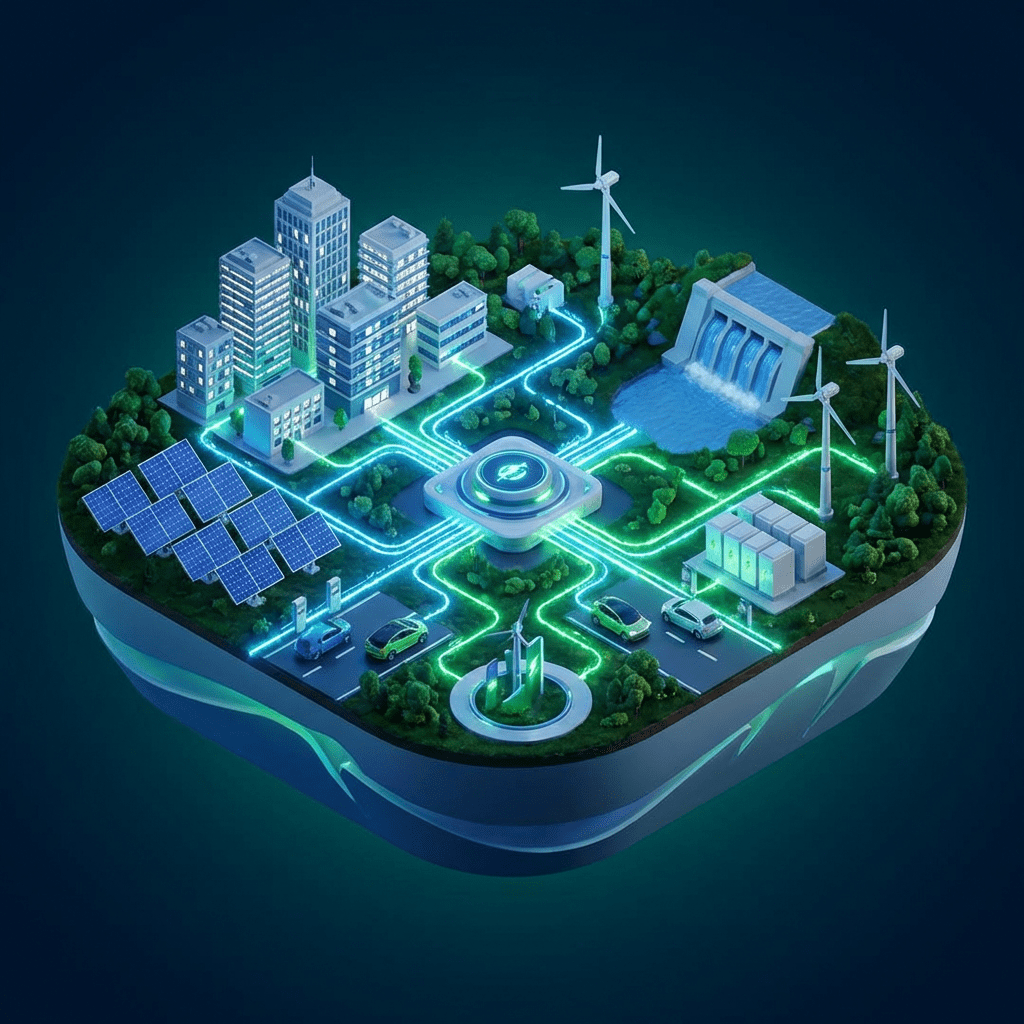
Microgrids are localised energy systems capable of operating independently or in conjunction with the main grid. They typically integrate renewable sources such as solar and wind power with storage systems, ensuring a reliable, continuous power supply even during grid disruptions.
Relevance in India’s Renewable Push
As India scales up its renewable capacity, variability in solar and wind generation poses grid stability challenges. Microgrids help absorb this intermittency by balancing local generation and consumption. In rural and remote areas, they enable renewable adoption without waiting for large-scale grid infrastructure, accelerating electrification and reducing reliance on diesel-based solutions.
Meeting Rising Energy Demand
India’s electricity demand is expected to grow significantly due to urbanisation, industrialisation, and digital infrastructure expansion. Microgrids reduce pressure on centralised grids by decentralising supply. Industrial clusters, commercial hubs, and even residential communities can deploy microgrids to ensure uninterrupted power, improving productivity and reducing outage-related losses.
Capacity Building and Grid Resilience
Microgrids enhance resilience by creating modular and distributed energy systems. In disaster-prone regions, they ensure critical services, such as hospitals and communication networks, remain operational. Additionally, they reduce transmission and distribution losses, improving overall system efficiency. For a country like India, where grid congestion and losses remain challenges, this is a significant advantage.
Role in Electricity Trading and Market Evolution
As India’s electricity markets develop, microgrids can play a role in localised energy trading. Prosumers (producers + consumers) can generate surplus energy and trade within a microgrid ecosystem. This aligns with emerging concepts like peer-to-peer energy trading and time-of-day pricing, making energy consumption more efficient and market-driven.
Conclusion
Microgrids are not just a technological innovation but a strategic enabler of India’s energy transition. By supporting renewable integration, addressing demand growth, improving resilience, and enabling localised energy markets, they offer a scalable pathway toward a more flexible, efficient, and sustainable power system.
 Lateral Thinking
Leave a comment