Introduction
Solar energy has come a long way, but improving efficiency without significantly increasing costs remains a key challenge. A promising breakthrough in this space is perovskite-silicon solar cells, a hybrid technology that combines two different materials to capture more sunlight and generate more power.
What is this technology?
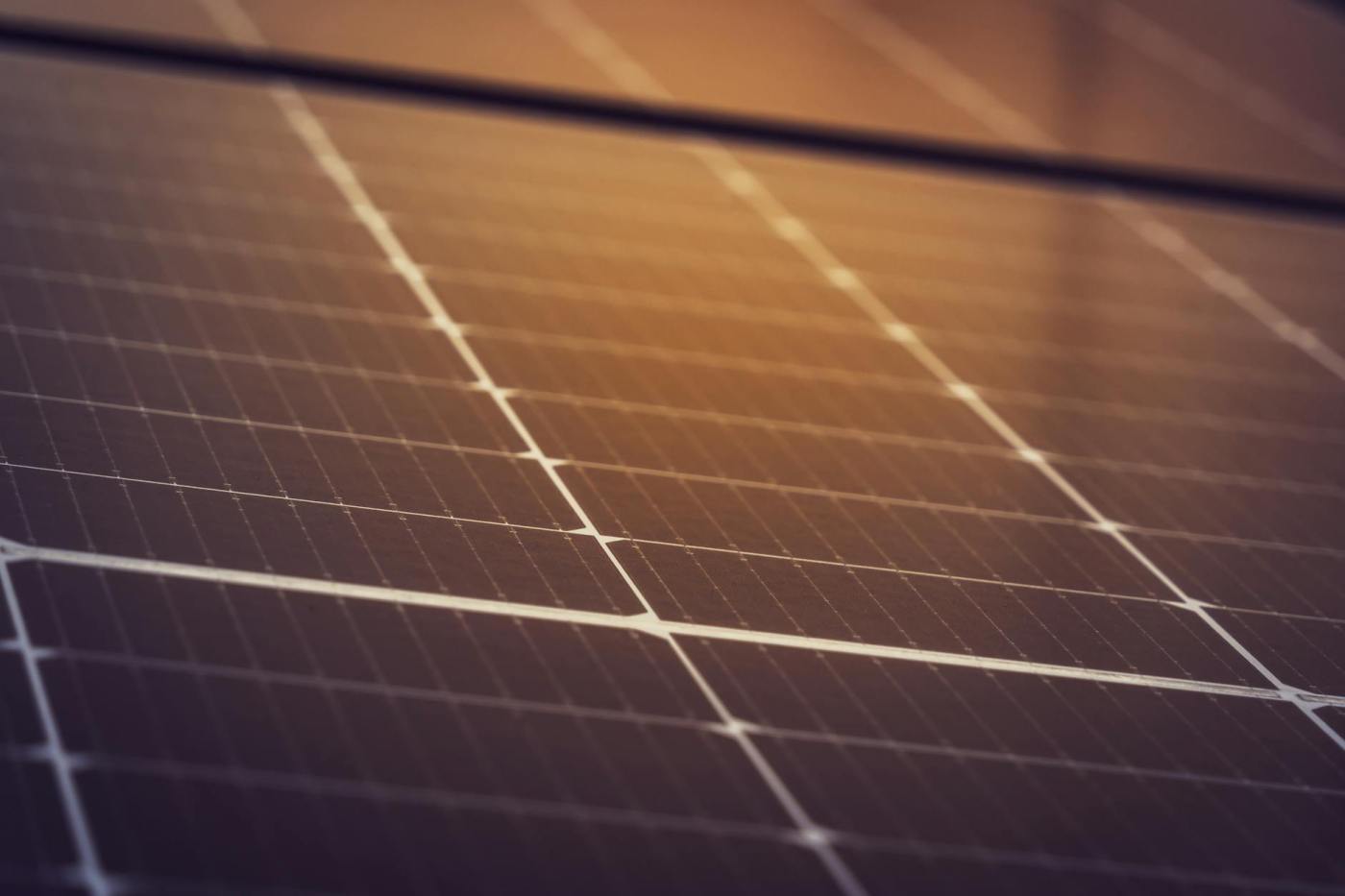
Traditional solar panels are mostly made from silicon, which has been reliable but is nearing its efficiency limits. Perovskite-silicon solar cells stack a thin layer of perovskite material on top of a silicon cell.
Perovskites are a class of materials known for their excellent light absorption and low manufacturing cost. When paired with silicon, the two layers capture different parts of the solar spectrum, essentially squeezing more energy out of the same sunlight. This design is often referred to as a “tandem cell.”
Why it matters
The biggest advantage of this technology is higher efficiency. While standard silicon panels typically operate around 20-22% efficiency, tandem cells have already crossed 30% in lab settings.
This means:
- More electricity from the same surface area
- Reduced land and installation costs
- Better performance in a limited space (like rooftops)
For countries like India, where solar adoption is scaling rapidly, this could significantly improve project viability and long-term returns.
What are the challenges linked to it?
Despite its promise, the technology is not yet fully commercial. The main concerns include:
- Durability: Perovskite materials are sensitive to moisture, heat, and UV exposure
- Stability over time: Long-term performance degradation is still being studied
- Manufacturing complexity: Scaling production while maintaining quality is challenging
- Cost consistency: While theoretically cheaper, real-world production costs are still evolving
What is next to expect from it
The next few years will likely focus on improving stability and scaling up manufacturing. Several companies and research labs are already working on making these cells commercially viable.
If these hurdles are addressed, perovskite-silicon solar cells could become the new standard in solar technology, offering higher efficiency without a major cost jump.
In simple terms, this innovation has the potential to make solar power not just cleaner, but also smarter and more efficient for the future.


Leave a Reply