
Introduction
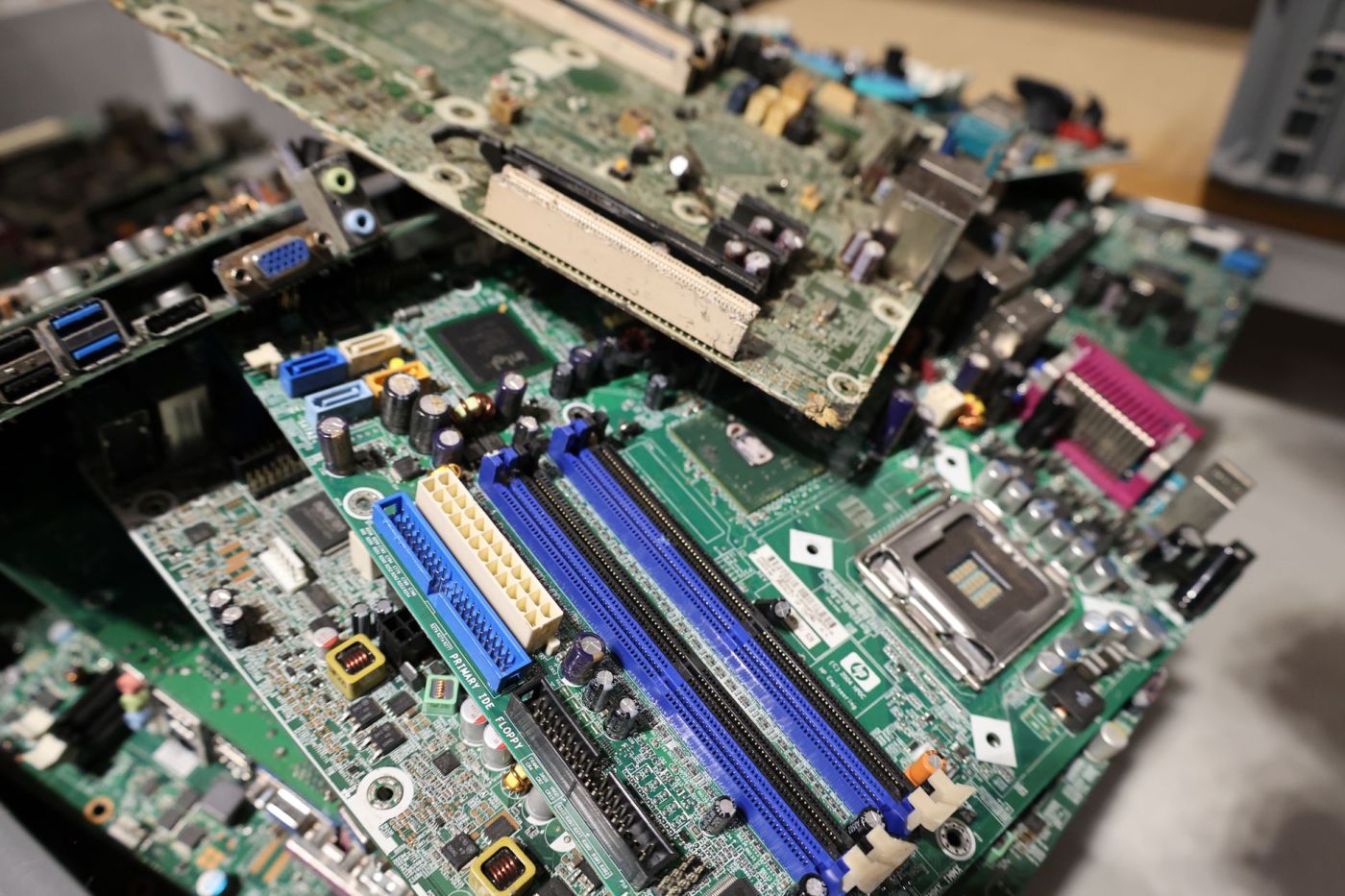
Every year, billions of electronic devices reach the end of their useful life. Old smartphones, computers, circuit boards and other electronic equipment are often treated as waste, but they contain valuable materials including gold, silver, platinum and palladium.
Gold is widely used in electronics because it is an excellent conductor and does not corrode easily. However, extracting new gold through mining requires significant energy, water and chemical inputs.
Researchers are now exploring a different approach: instead of mining the earth for metals, recover them from the devices society already uses.
Scientists at the University of Illinois Urbana-Champaign (UIUC) have developed an electrochemical approach that can recover precious metals from electronic waste using significantly fewer chemicals and lower energy compared with conventional processes.
Why Traditional E-Waste Recycling Is Challenging
Electronic waste is one of the fastest-growing waste streams globally. While it contains valuable metals, recovering them is technically complex.
Traditional methods often involve:
- Strong acids and chemical leaching processes
- High temperatures and energy-intensive operations
- Multiple purification steps
- Generation of hazardous waste streams
These challenges mean that a significant portion of valuable metals in discarded electronics is never recovered.
According to researchers, gold used in electronics represents a meaningful share of global gold demand, while large quantities of electronic devices continue to end up in landfills.
How Electricity Can Recover Gold
The Illinois research team developed a process based on electrochemical liquid-liquid extraction (e-LLE).
Instead of relying mainly on chemical reactions, the process uses electricity to selectively separate valuable metals from dissolved electronic waste.
The technology involves:
- Dissolving electronic waste materials into a solution
- Using electrochemical reactions to selectively capture gold and other precious metals
- Converting recovered metals into solid forms through processes such as electroplating
- Recycling parts of the extraction system to reduce waste
The approach can selectively recover gold and platinum group metals while separating them from less valuable metals such as copper, nickel and silver.
Why This Breakthrough Matters
This technology represents a shift from a linear economy, where resources are extracted, used and discarded, towards a circular economy where materials continuously return into production cycles.
Clean metal recovery can provide several benefits:
- Reduced dependence on mining
- Lower environmental impact
- Recovery of critical materials
- Improved security of supply chains
As demand grows for electronics, renewable energy technologies and electric vehicles, securing supplies of critical metals will become increasingly important.
Beyond Gold: The Future of Urban Mining
The concept of recovering metals from waste is often called urban mining.
Future recycling systems could recover:
- Gold from circuit boards
- Lithium, cobalt and nickel from batteries
- Rare earth elements from electronics and magnets
- Platinum group metals from industrial equipment
Researchers worldwide are exploring complementary approaches, including photocatalytic recovery, advanced solvents and electrochemical separation technologies to make metal recycling more efficient.
Opportunities for India and Emerging Economies
Countries such as India face a growing e-waste challenge due to rapid digitalisation and increasing electronics consumption.
Advanced metal recovery technologies could help India create a stronger recycling ecosystem by combining:
- Formal e-waste collection networks
- Scientific recycling facilities
- Precious metal recovery plants
- Circular economy businesses
For companies working in waste management, this represents an opportunity to move beyond waste disposal and create value from discarded materials.
What Investors Should Watch
The next generation of recycling companies may not only collect waste but also become resource recovery companies.
Investors should watch developments in:
- Electrochemical recycling technologies
- Battery material recovery
- Rare earth recycling
- AI-enabled waste sorting
- Circular economy infrastructure
The future of mining may increasingly happen above ground — inside cities, factories and recycling facilities.
The Road Ahead
Recovering gold from e-waste using electricity demonstrates how chemistry and engineering can transform waste into resources.
While large-scale commercial deployment will require further optimisation, cost reduction and industrial validation, the direction is clear: the metals needed for the future economy may already exist in the products we throw away.
A sustainable future will not only depend on discovering new resources – it will depend on learning how to recover and reuse the ones we already have.
References for further reading
- Economic Times – University of Illinois researchers develop cleaner gold recovery from e-waste
- University of Illinois – Electrochemistry helps clean up electronic waste recycling and precious metal mining
- Nature Chemical Engineering – Scalable and selective gold recovery from end-of-life electronics
- International Telecommunication Union (ITU) – Global E-Waste Monitor Reports
- United Nations Environment Programme (UNEP) – Circular Economy and Resource Recovery Reports
- ACS Sustainable Chemistry & Engineering – Electrochemically mediated recovery and purification of gold for sustainable recycling


Leave a Reply