

Background
Nowadays in the Indian market, we come across advertisements which flaunt a punchline for Ceiling Fans – “Anti-Dust”.
This indeed is a break from the routine as these fans claim to have the following advantages over their predecessors(normal ceiling fan)[1][2]:
- Reduced dust collection(by ~50%)
- Ease of cleaning
So does this really mean we have a breakthrough?
Answer: YES
Can this be extended to the other facets of the consumer durables which require cleaning & maintenance on a regular basis??
Answer: Possibly YES…..
Now let us try to understand how these fans are able to shrug off dust & dirt in comparison to normal ceiling fans

The fan blades are coated with paint that is hydrophobic and oleophobic in nature[3][4].
Hydrophobic: Nonpolar molecules that repel the water molecules
Oleophobic: A type of material which lacks an affinity for oils
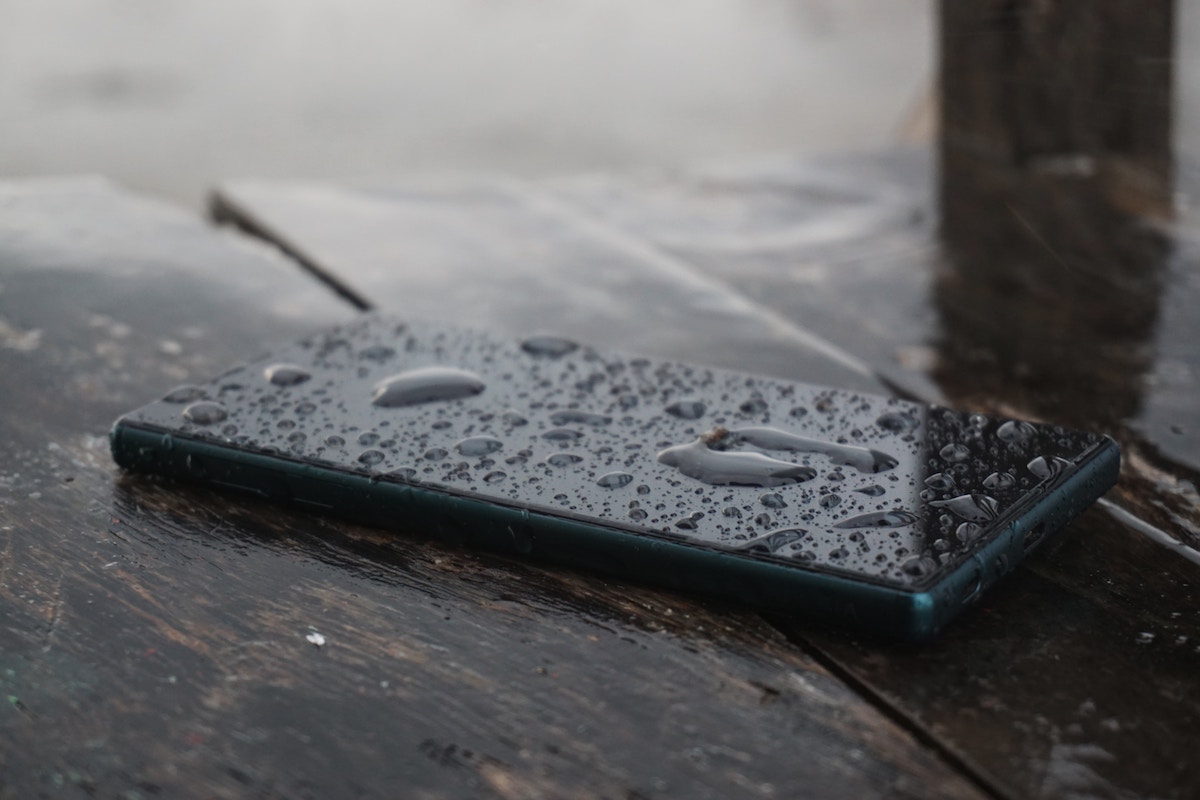
Fig 1. Smartphone Screen having oleophobic coating [5]

The following video will demonstrate briefly how ‘Anti-Dust’ Fans make life convenient in comparison to their conventional peers
The formulated ‘Anti-Dust’ coating is proprietary and arrived at after years of research.
The Coating will include the following[6][7][8]
Thermoset adhesive
They are crosslinked polymeric resins which undergo a chemical reaction when curing is done using heat and/or heat and pressure such that the structure formed has superior strength and environmental resistance[10].
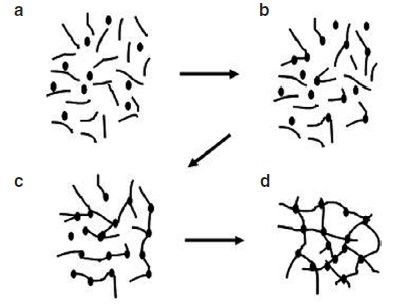
Fig 2. Cross-Linking in Thermoset compound [9]

In order to neutralize the electrostatic charge which has risen due to friction small amounts anti-static agents like fumed alumina are used[10]
Lubricity agent
Lubricity is used to quantify the reduction friction owing to a lubricant[11]. This is determined by the wear caused to the surface by a given object over a period of time. PDMS can possibly be used to fulfill this role.
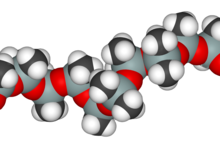
Fig 3. Polydimethylsiloxane (PDMS) [12]
Other than this it has a Conductivity component, Dispersant, Solvent & Binder(the ratio in which it is present in the coating over the surface determines the dust buildup over time) and UV(ultraviolet) Activator
The coating derived from them will have the hydrophobic and oleophobic nature, thereby keeping dust & dirt at bay.
Conclusion
We have seen that major disruptions can be brought about in an existing market with the use of nanotechnology & materials science.
In this case, the ‘anti-dust’ coating need not be limited to the ceiling fan blades but can be extended to window blinds, furniture etc.
PS: This post is just for elucidating the science behind the anti-dust fans & not to endorse any specific brand
If you want to share your opinion kindly do so in the comments section or email me at u2d2tech@gmail.com.
References
- https://atomberg.com/anti-dust-ceiling-fan/
- http://www.pack1064.org/the-technology-behind-anti-dust-fans.html
- https://www.researchgate.net/publication/312899765_Review_of_defrosting_methods/figures?lo=1
- http://www.mybignano.com.zm/hydrophobic-nanotechnology/
- https://nanoslic.com/oleophobic-coatings/
- https://patents.google.com/patent/US9546284B1/en
- https://patents.google.com/patent/US20110076478/3Den
- https://patents.google.com/patent/US20110038721
- https://www.globalspec.com/learnmore/materials_chemicals/adhesives/thermoset_adhesives
- https://www.aerosil.com/product/aerosil/en/effects/antistatik/
- https://en.wikipedia.org/wiki/Lubricity
- https://www.heraeus.com/en/hng/the_incredible_power_of_light/pre_treatment_and_activation_of_surfaces.aspx
 Lateral Thinking
Hey! I just wanted to ask if you ever have any problems with hackers? My last blog (wordpress) was hacked and I ended up losing a few months of hard work due to no backup. Do you have any methods to stop hackers?
LikeLike