Introduction
Sorting is one of the most critical steps in plastic recycling.
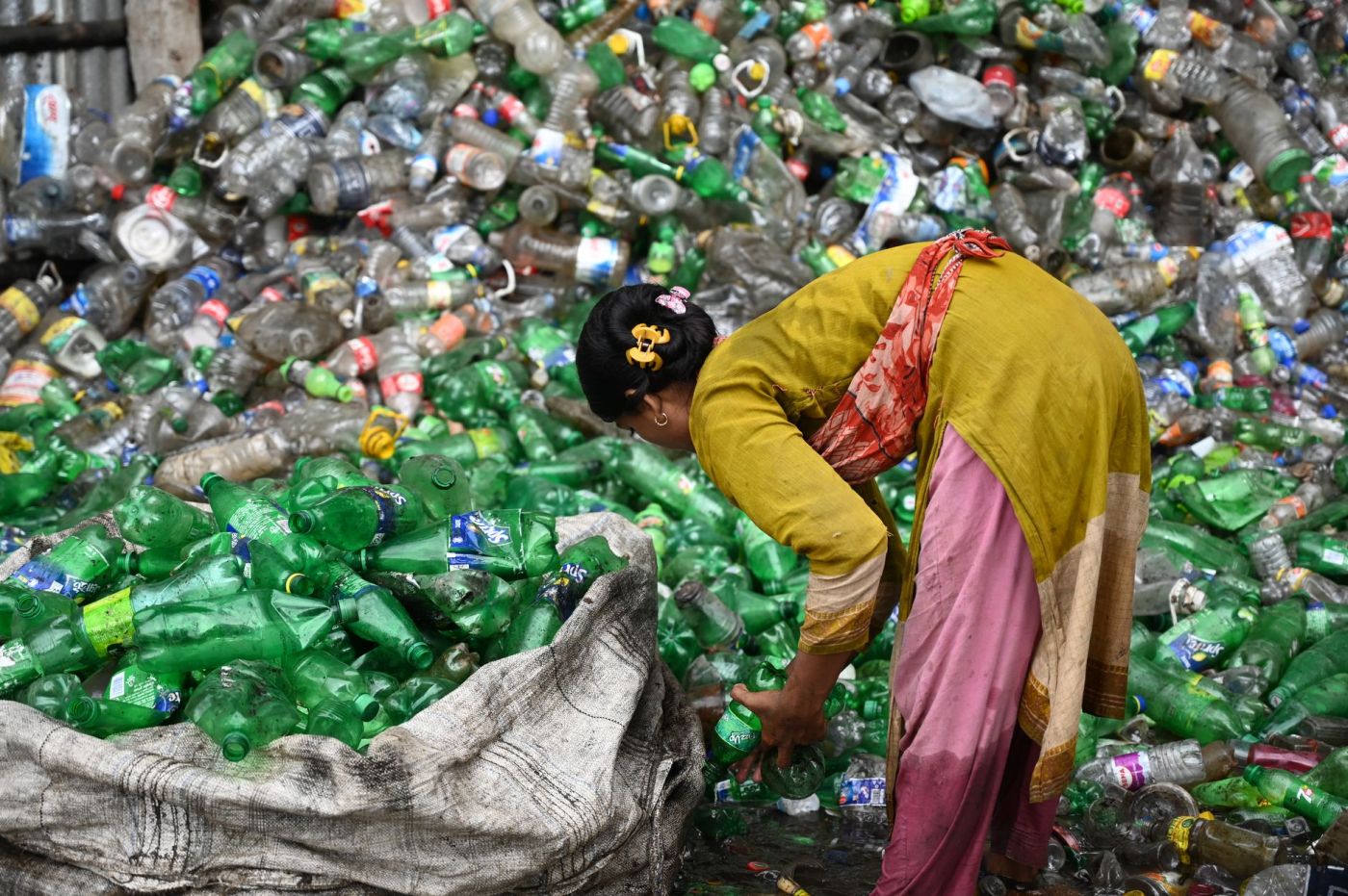
The quality of recycled plastic largely depends on how well different plastic types are separated before processing. However, post-consumer plastic waste is highly mixed, contaminated with food residues, labels, adhesives, and often contains multiple polymers in a single product.
Flexible packaging, multilayer plastics, black plastics, and coloured materials further complicate the sorting process. Even small amounts of contamination can reduce the quality and value of recycled plastics, making them unsuitable for high-value applications.
Physical Methods Used for Plastic Sorting
Most Material Recovery Facilities (MRFs) rely on a combination of manual and automated physical sorting techniques.
These include
a) Conveyor-based manual picking
b) Screening by size, magnetic and eddy current separators to remove metals, air classification for light materials,
c) sink-float (density) separation
d) Near-Infrared (NIR) optical sorting that identifies common polymers such as PET, HDPE and PP.
While these methods are proven and widely deployed, they have limitations.
Dark or black plastics often cannot be detected by conventional NIR systems, while flexible films and multilayer packaging remain difficult to separate efficiently.
Manual sorting also depends on labour availability and consistency.
How Digital Technologies are Improving Sorting
Digital technologies are making plastic sorting faster and more accurate.
Artificial Intelligence (AI), machine learning, computer vision, hyperspectral imaging, robotics and smart sensors can identify plastics based on their shape, colour and material composition in real time.
AI-powered robotic arms can pick targeted plastics at high speed, while digital tracking systems and product passports can improve traceability throughout the recycling value chain.
Although these technologies significantly improve recovery rates, they require high capital investment, quality training datasets, skilled operators and integration with existing infrastructure. Their performance may also reduce when plastics are dirty, damaged or highly mixed.
Key Considerations for Adoption
Technology alone cannot solve the plastic sorting challenge.
Recycling facilities must evaluate investment costs, maintenance requirements, local waste composition, available technical expertise, throughput requirements and market demand for recycled materials.
In many developing countries, affordability and ease of maintenance are equally important as technological sophistication. A phased adoption approach often delivers better long-term results than investing in highly complex systems immediately.
The Best Way Forward: Start with Segregation at Source
The most effective solution begins before waste reaches the recycling facility.
Segregating waste at source (by households, businesses and institutions) greatly reduces contamination and improves recycling efficiency.
This should be supported by standardized packaging design, clear recycling labels, Extended Producer Responsibility (EPR), public awareness campaigns and investments in modern sorting infrastructure.
When source segregation is combined with AI-enabled sorting technologies, recycling facilities can achieve higher recovery rates, better-quality recycled plastics and a stronger circular economy.
References
- Lubongo, C. et al. (2024). Recent Developments in Technology for Sorting Plastic Waste. MDPI.
- Bernat, K. et al. (2023). Post-Consumer Plastic Waste Management: From Collection to Sorting.
- OECD – Plastics and Circular Economy.
- Bhattarai, L. et al. (2026). AI-based Plastic Waste Classification for Sorting Purposes.
- EcoEx (2025). The Role of Artificial Intelligence in Optimizing Plastic Waste Sorting and Recycling under EPR Schemes.


Leave a Reply