
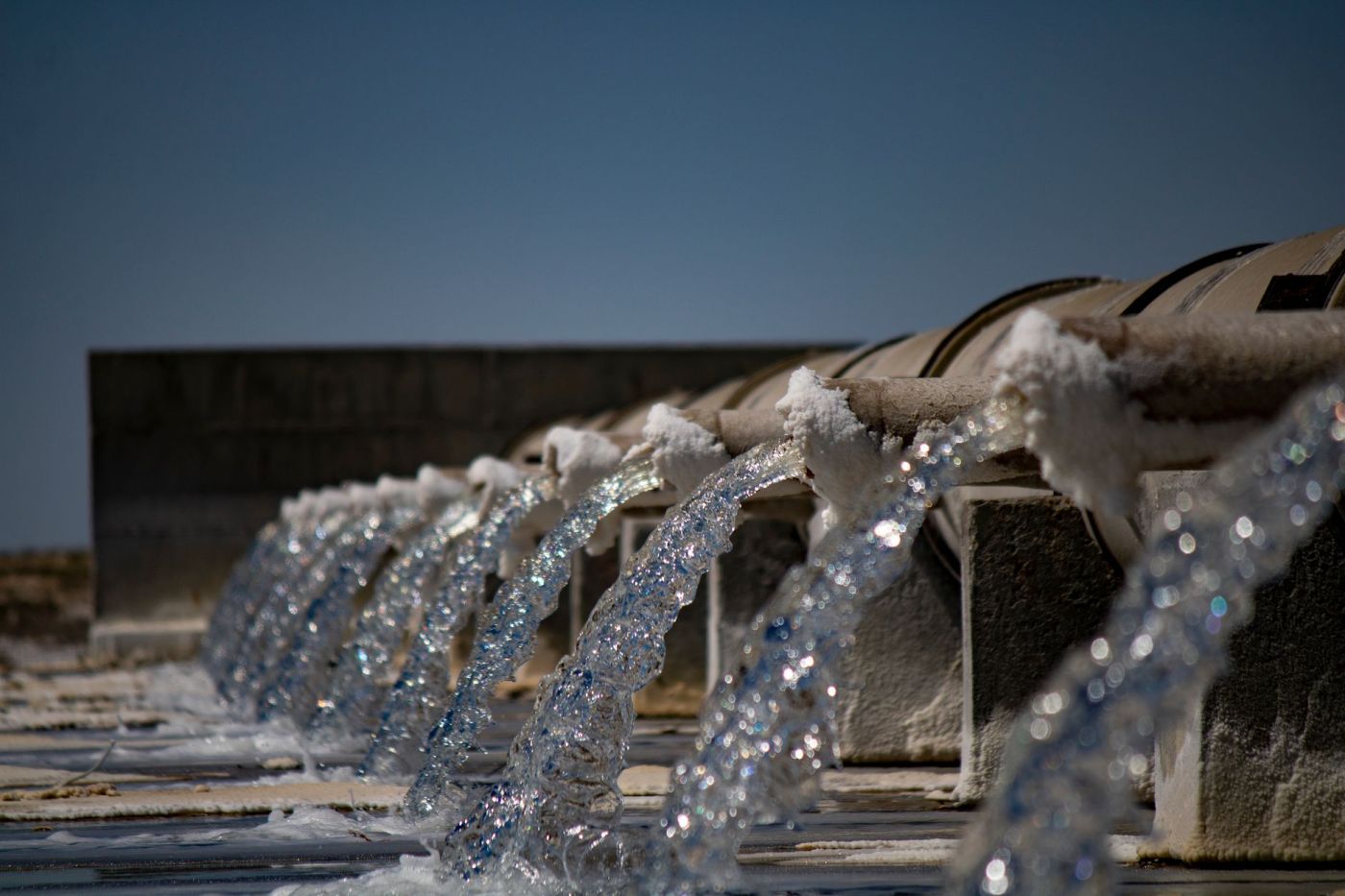
Introduction
Desalination is the process of removing salts and impurities from seawater or brackish water to produce freshwater suitable for drinking, agriculture, and industrial use.
As global freshwater stress increases due to population growth, climate change, and groundwater depletion, desalination is emerging as a critical supplementary water source rather than a primary one.
Countries with limited freshwater resources – especially in the Middle East, parts of Asia, and coastal regions – are increasingly relying on it to secure water resilience.
History of Desalination
The idea of desalination is not new. Early sailors used simple distillation methods to convert seawater into drinking water during long voyages.
By the 20th century, industrial-scale desalination began to develop, particularly in arid regions like the Gulf countries. The major breakthrough came in the mid-to-late 1900s with the advancement of membrane technologies and thermal distillation systems, which made large-scale water production economically viable.
Today, desalination plants are highly engineered facilities, producing millions of liters of freshwater daily.
Process of Desalination
There are two primary methods of desalination:
a) Thermal distillation and
b) Membrane-based filtration
In thermal processes, seawater is heated so that it evaporates, leaving salts behind, and the vapor is condensed into freshwater.
In membrane processes, seawater is forced through semi-permeable membranes that block salt molecules.
The most widely used modern method is. In this process, high pressure is applied to seawater, pushing it through a membrane that separates dissolved salts and impurities, producing potable water on the other side.
This method is more energy-efficient than traditional thermal techniques and is widely adopted in new desalination plants.
Challenges of Desalination
Despite its advantages, desalination faces several challenges.
The most significant is high energy consumption, which often leads to increased carbon emissions if powered by fossil fuels. Another concern is the environmental impact of brine discharge, where concentrated salt by-products are released back into the ocean, potentially affecting marine ecosystems.
Additionally, the high capital and operational costs make desalination less accessible for developing regions. Maintenance of membranes and infrastructure also adds to long-term expenses.
The Path Ahead
The future of desalination lies in improving efficiency, sustainability, and affordability.
Renewable energy integration, especially solar and wind-powered desalination, is gaining momentum. Advances in membrane technology are also expected to reduce energy requirements and increase water recovery rates. Researchers are exploring hybrid systems and AI-driven optimization to improve plant performance.
At the same time, better brine management solutions are being developed to minimize environmental harm.
As water scarcity intensifies globally, desalination will not replace traditional freshwater sources but will increasingly act as a critical supporting pillar in global water security strategies.


Leave a Reply